


County Clerks: Come for the Reform, Stay for the Irony
Our running series from Intern Mary continues as she learns why some offices are political, what they actually do, and why it matters that we know.
This is the Clerk’s Edition. Stick around to the end, because Mary unpacked some surprising Clerk facts from right here in HamCo.
Historical Origins
Similar to the Sheriff, the County Clerk also has roots back in medieval times. The word Clerk comes from the Latin clericus, meaning “member of the clergy.” Back then, literacy was so rare, priests and monks were basically the only ones who could read or write. So kings and feudal lords hired them to handle state affairs, legal administration, and accounting. Sheriffs, on the other hand, were often chosen more for their ability to enforce the law than their penmanship. Since many couldn’t read or write, a “clerc” (clerk) was sent along to handle the paperwork. Cool, right?

Eventually, the demand for record‑keeping outgrew what the church could handle. Clerks became professional scribes trained in penmanship, translation, and accounting. Norman kings even separated the job of recording court decisions from judges themselves, creating the Court Clerk as a distinct secular official. That separation laid the foundation for today’s civil service.
The Clerk in America
Colonists brought the system to America. Counties needed someone to track land ownership, property deeds, and court cases. Clerks kept records of life events, births, deaths, marriages and managed court paperwork, so the Office of Clerk was one of the first established.
After the Revolution, democracy expanded. Offices once appointed by governors or judges became elected positions because reformers wanted to destroy the political power of wealthy elites and give control directly to the common man. By the 1800s, new state constitutions made the County Clerk a constitutional office, protecting them from interference and guaranteeing neutrality. By the late 1800s, party machines ran the show. They controlled ballots, campaigns, and visibility. Even neutral offices like clerks were pulled into the partisan system.
Modern Responsibilities
Today, the County Clerk’s office is a powerhouse:
Elections: registration, polling places, early voting, mail‑in ballots, certification.
Judicial Records: case files, judgments, jury lists.
Vital Records: marriage licenses, payroll, child support, archives.
Business & Licensing: liquor licenses, permits, applications.
Financial Records: tax documents, county archives.
It’s a job that demands neutrality. Yet the partisan label makes it look political, even when the work itself is administrative.
Indiana’s Unique Twist
Traditionally, a court clerk handled judicial records, while a county clerk managed public records and elections. Running elections is what separates the two. But Indiana merges them into one: the Clerk of the Circuit Court. Across all 92 counties in Indiana, the elected clerk wears both hats; record‑keeper for court trials and manager of county‑wide voter registration and ballots. The only major record they don’t touch? Real estate, which belongs to the County Recorder.
The Election Board Setup
As we’ve covered, the elected County Clerk has a wide range of duties. Because running a massive judicial system and a county‑wide election is too much to ask of one person, the office is split into two tiers. Enter the Election Board, which steps in to make the high‑stakes political decisions:
Picking voting locations
Resolving ballot disputes
Officially certifying final vote counts
This board is made up of three members:
The County Court Clerk ( Secretary of the Board)
Two appointees ( one Republican and one Democrat) nominated by each of the major party county chairs and appointed by the Clerk.
These appointed members serve until they resign or until the party county chair removes and replaces them. There’s no set term of office.
So the Clerk isn’t just a record‑keeper, they’re also the gatekeeper of election administration, sitting alongside two partisan appointees who can be swapped out at any time.
Opinion Piece: Mary’s Take
How can you ask someone to choose sides, then expect them to be neutral?
That’s exactly what’s happening with clerks today. There's no “Republican way” to file a lawsuit. No “Democratic way” to issue a marriage license (at least there shouldn't be). Yet these administrative roles run along party lines. The irony is deep! A system built to ensure neutrality and accountability has instead dragged neutral offices into hyper‑partisanship.
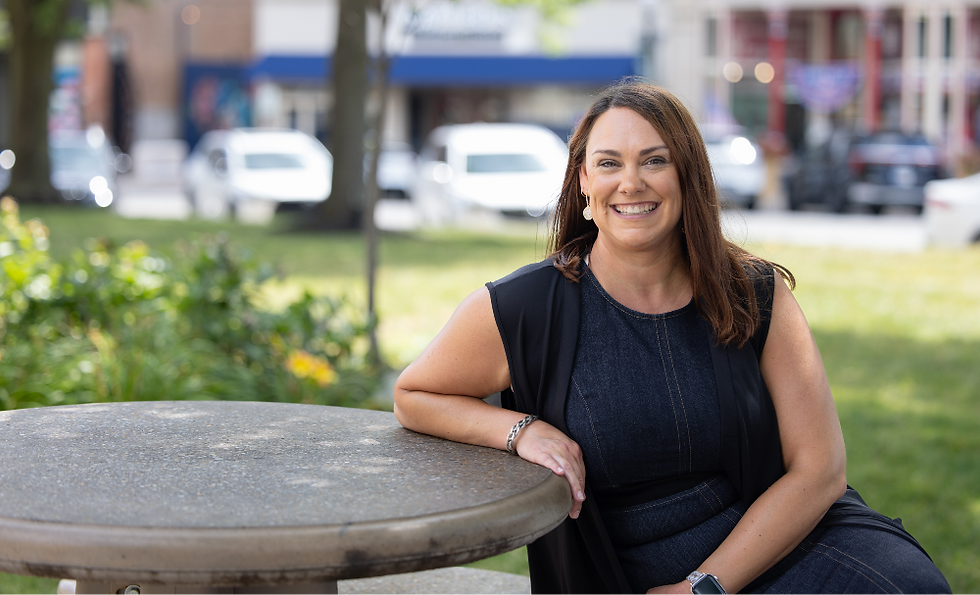
In Hamilton County, the Clerk’s office has been held by Republicans for decades. It’s been over 20 years since a Democrat ran a competitive race. The current Republican candidate, is also the Secretary of the Hamilton County Republican Party while also working as the county's full-time Elections Administrator.
Think about that for a second.
The very person hired to remain completely neutral and manage the daily logistics of the voting booths is simultaneously a high-ranking officer for one of the competing political teams as well as a candidate. This built-in flaw in our system permits (and forces) a staff member to handle the physical voting machinery and voter rolls for the exact same election where her own name is on the ballot.
When a single individual is simultaneously the election worker, a party leader, and a candidate, that overlap creates a conflict of interest. The duties of her current position are compromised when her name is on the ballot.
This is why balance matters.
The Clerk’s office isn’t about one side winning, it’s about everyone trusting the process. That trust only happens when both parties are represented. Balance ensures people have a choice and protects confidence in elections and records, no matter who you are.
Final note:
Thanks for sticking with me through this one. I know it’s a little longer than usual. But there’s just so much to unpack here, because policy and structure can get pretty complicated.
The more I dig, the more I realize these “boring” offices are actually the gears that keep democracy running. And if we don’t understand them we are left out of important conversations and from making informed decisions.

Mary Tezera
HamCo Dems Summer Intern


Comments